

Owning a canal-front or Intracoastal property near Surfside Beach comes with a different set of responsibilities than a typical inland home.
Water access adds value and lifestyle benefits, but it also means maintaining structures that are constantly exposed to tides, saltwater, and weather. Bulkheads, docks, and boat lifts all play a role in how a waterfront property functions over time.
Understanding how these systems work and how they are maintained can help homeowners make better long-term decisions.
Understanding Bulkheads Along the Texas Coast
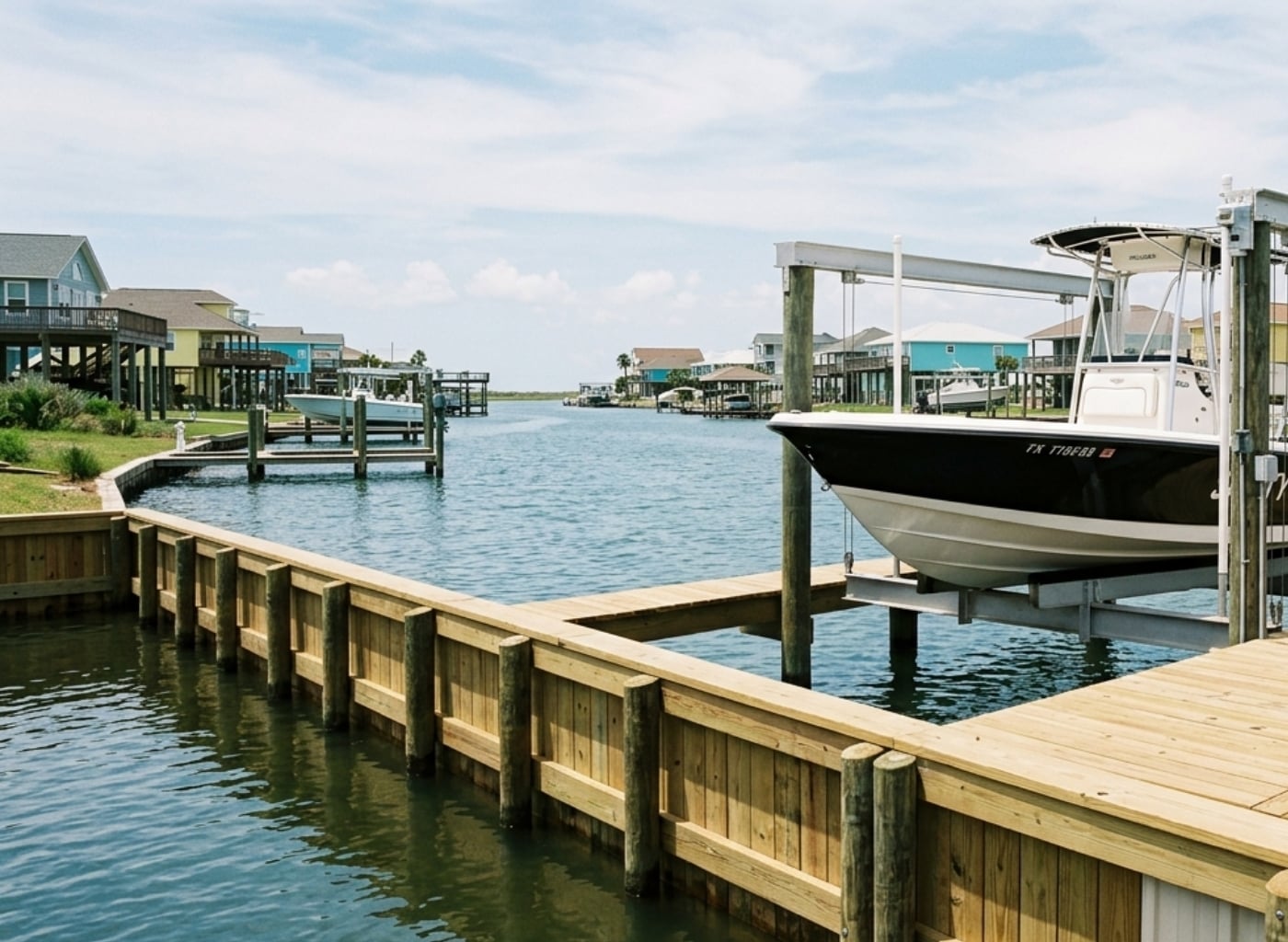
A bulkhead is a retaining wall built along the water’s edge to prevent erosion and stabilize the shoreline.
Along the Intracoastal Waterway and canal systems near Surfside Beach, bulkheads are especially important because boat traffic and changing tides can gradually wear away the land. Without a bulkhead, the shoreline can recede over time.
Most bulkheads in this area are made from treated wood (timber), vinyl, concrete, or composite materials. Each type has a different lifespan and maintenance requirement.
Timber bulkheads are common but may require more frequent repairs due to rot and marine exposure. Vinyl and concrete systems tend to last longer, but the upfront cost is typically higher.
Over time, homeowners should expect to monitor for signs like leaning walls, soil loss behind the structure, or visible cracks. These are often early indicators that repairs may be needed.
Boat Lifts and Why They Matter
Boat lifts are designed to raise a boat out of the water when it’s not in use.
In coastal environments like Surfside Beach, leaving a boat in the water full-time can lead to faster wear due to salt exposure, barnacle growth, and corrosion. A lift helps reduce that long-term damage.
There are different types of lifts used along the Intracoastal, including cradle lifts and elevator-style lifts, depending on dock design and water depth.
A properly sized and installed lift supports the weight of the boat and helps keep it secure during changing water levels. Routine maintenance typically includes checking cables, pulleys, motors, and electrical components.
Saltwater environments can be hard on mechanical systems, so regular inspection is important to keep everything working as expected.
Dock Maintenance in a Coastal Environment
Docks are one of the most used features of canal-front homes, but they also take constant exposure from sun, water, and shifting conditions.
Routine maintenance helps extend the life of the structure.
This usually includes checking decking boards, fasteners, and support pilings. In coastal Texas, marine organisms such as barnacles can attach to submerged portions of the dock, gradually affecting materials over time.
Hardware like bolts and brackets may corrode faster in salt air, so periodic replacement is common.
Wood docks often require sealing or staining, while composite materials may reduce maintenance but still need inspection.
Storms and high tides can also impact docks, so it’s common for homeowners to inspect structures after major weather events.
Permits and Coastal Considerations
Work along the Intracoastal Waterway and surrounding canals is often regulated.
In Texas, agencies such as the Texas General Land Office (GLO) and the U.S. Army Corps of Engineers may require permits for bulkhead repairs, dock construction, or modifications near navigable waters.
Local regulations can vary depending on the exact location, so it’s important for homeowners to verify requirements before starting any major work.
Understanding these guidelines early can help avoid delays or unexpected issues.
What Buyers Should Pay Attention To
For buyers considering canal-front or Intracoastal properties near Surfside Beach, these structures are part of the overall value of the home.
It’s common to look at:
The condition and material of the bulkhead
Whether the dock appears structurally sound
The age and functionality of any boat lift
Signs of recent repairs or maintenance
These features are not just add-ons they directly affect how the property can be used and what future upkeep may look like.
Final Thoughts
Waterfront living along the Intracoastal near Surfside Beach offers a different kind of experience.
Bulkheads protect the land, docks create access, and boat lifts help preserve equipment. Together, they shape how a coastal property functions day to day.
When these elements are maintained well, they support both the lifestyle and the long-term condition of the home. For both homeowners and buyers, understanding how they work is an important part of owning property along the water.

Written by: Grace Reutzel | Broker, Land Shore Realty Group | Surfside Beach, Texas
Check out this article next